okies, here is one of many cylinder seals which Sitchin used to support his Alien Hypothesis,
he never states where the original is held and you never see a photo of it, its just a line drawing done by Sitchin himself, thats a little odd to start with, if he's seen the seal with his own eyes surely it would be easier and more logical to just post a photo.
this I copied from
www.sitchin.com where Sitchin states it shows
an astronaut (“Fishman”, equipped for splashdowns) on Mars
The astronaut is supposedly the character on the far right
which is odd, here is a photo of a real cylinder seal from about 1700BCE,
you'll notice there is a familiar figure on the far right
even the star indicating that the figure is a deity has been copied
make no mistake about this, the artists that carved cylinder seals did not have any way of mass producing them, they were created on individual commission, so you never find identical images on two seals as each was carved by hand and one of a kind
as you can see Sitchin has reproduced the original with a few small changes
the clothing has become more cyber and the headdress is now a helmet.
the character which appears on a babylonian cylinder seal is described by Sitchin as Sumerian, which if you were paying attention earlier and recognise this as the fight between Bel Marduk and Tiamat you will already know is actually Babylonian. Again cylinder seals were not massed produced in the same culture, so you're even more unlikely to see exactly the same figure on a Sumerian seal circa 3000BCE and again 1200 years later on a Babylonian one,
The funniest thing about this is that the figure on the original seal is actually a woman believed to be Inanna which can be seen by the fact that shes actually wearing a dress.
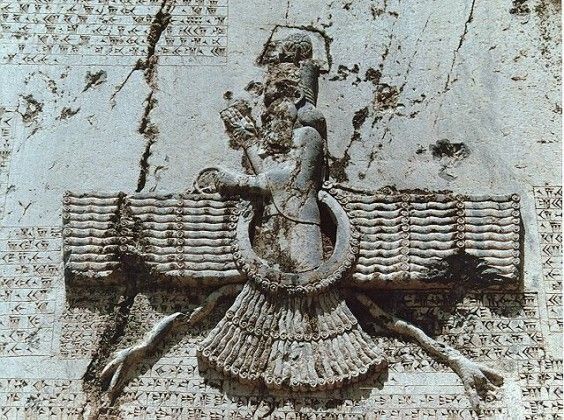
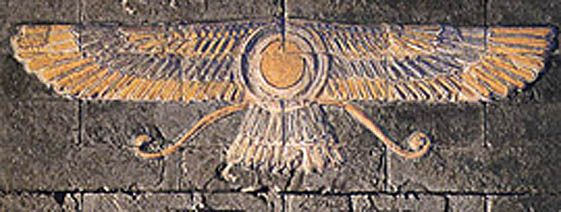
the symbol in the middle is known as the winged disc, its a symbol associated with dragon killing cultures and specifically the dragon killing god, its design has changed from ancient times until some of the last appeared in symbolising Ahura Mazda, the dragon killing god of Zoroaster where it was called the "Faravahar"
http://en.wikipedia.org/wiki/Faravahar
here's one of those circa 800BCE
Again the similarities are overwhelming. the Iranian version is the only one which has those blocky shaped wings, all the others are represented with birds wings like this example from Susa in Mesopotamia
then take a look at the sword on the far left of Sitchins picture. it is shown as a typical lovely straight edged medieval shaped sword which is very strange, because straight swords weren't used until the Roman period, even then in the Mesopotamian region they were using a sword called "sappara", which is for want of a better description what most people call a "scimitar"
http://en.wikipedia.org/wiki/Sickle-sword
finally we come to the smallest detail, the fish
you'll see it here in its original form on a seal from 2400BCE
and if you look to the far left of this seal you will see another female figure which again is Inanna except this being a seal from Akkadian culture she is represented in a different style.
so Sitchins seal contains elements from:-
a cylinder seal circa 1700BCE
a symbol from 800BCE
a sword that didn't exist then
a cylinder seal circa 2400BCE
Are you starting to see why Sitchin never produces the original artifact that his line drawing supposedly represents.
It is imo, evidence like this that show that Sitchin is not just offering his interpretation, but actually manufacturing evidence to support it, this changes him from "misguided" to "fraudulent", Sitchin came up with the twelth planet concept in the same way, by interpreting a cylinder seal and lieing about what it depicts. I think my earlier article on the "scorpion planet" illustrates that quite well already