mikegriffith1
Muse
- Joined
- Sep 25, 2012
- Messages
- 805
To avoid posting an overly massive message, I’m going to split this material on the Lurline bearings and the radio-silence myth into two or three parts. I will start with an extensive review of historian Ladislas Farago’s treatment of Grogan and the Lurline bearings.
But before I do so, I think it is worhth noting that for years the traditionalist explanation for the Lurline bearings was that Grogan was listening to Russian ships and that, in spite of his radio knowledge and decades of experience in listening to ships in the Pacific, he mistook them for Japanese ships. That theory, though advanced by “experts” (including one from NSA), was never really plausible and now stands refuted and discarded.
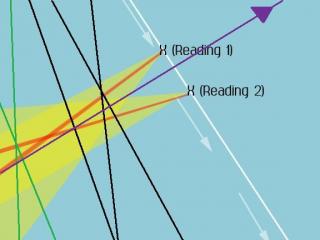
So now we’re told, by Jacobsen, that Grogan did indeed hear Japanese ships but that they were Japanese commercial vessels that were “bunched up” (his words)—not in the North Pacific, but in Japan’s home waters! One problem with this theory is that it requires one to believe that most of Grogan’s DF bearings were off by a staggering degree and that some of his anomalous bearings were much more accurate. Yet, Villa and Wilford point out that the bulk of Grogan’s bearings are consistent with the 3rd Battleship Division’s position reports that the task force “moved about ten degrees east along the forty-second parallel (179°W to 169°W) from 30 November to 2 December” (“Warning at Pearl Harbor: Leslie Grogan and the Tracking of the Kido Butai,” The Northern Mariner, 21:2, April 2001, p. 6).
So far I have only read two extracts from Jacobsen’s article. I will be getting the entire article this weekend. Villa and Wilford respond in detail to Jacobsen’s article in their 2006 paper “Signals intelligence and Pearl Harbor: The State of the Question,” Intelligence and National Security, 21:4, 2006, pp. 520-556, http://dx.doi.org/10.1080/02684520600885665). They seem to make some very strong points, but I want to read Jacobsen’s entire article before commenting further on their response.
One thing I will be curious to see is how Jacobsen explains the repeat-backs that Grogan heard for two nights in a row, and the fact that the rebroadcasts were acknowledged almost verbatim. I can think of two arguments: (1) Grogan was simply mistaken about the repeat-backs and so they don’t need to be explained because they never occurred, or (2) the repeat-backs came from the Japanese commercial vessels. The first argument is implausible, given Grogan’s extensive radio knowledge and decades of experience. The second argument seems equally implausible, unless one could come up with a credible reason that commercial vessels in Japanese home waters would have needed to use repeat-backs.
Before I get to Farago’s analysis, let me say a quick word about the myth of radio silence. We have a number of examples of radio transmissions from the task force. One of them comes from a famous collection of Pearl Harbor papers edited by Goldstein and Dillon, The Pearl Harbor Papers: Inside the Japanese Plans (New York: Prange Enterprises, 1993). Therein we learn that on 12/6 (12/7 Tokyo time) the skipper of submarine I-72, one of the subs working in support of the task force, radioed a message to the “Advance Force and Task Force” that “the enemy is not in the Lahaina anchorage” (p. 243). In an article titled “Hawaii Operation,” Vice Admiral Shigeru Fukudome discussed the fact that I-72 was part of the task force’s submarine forces (in Paul Stillwell, editor, Air Raid, Pearl Harbor!: Recollections of Day of Infamy, Annapolis, Maryland: U.S. Naval Institute, 1981, pp. 66-67).
One more point about the radio-silence myth: As I mentioned earlier, A. J. Barker studied the evidence relating to the SS Lurline DF and signal info and concluded that Grogan must have heard and DF’d the Japanese task force. He realized that this contradicted the radio-silence story and he provided a very sensible explanation for why the task force would have used low-power LF signals, just as Grogan reported:
“To ensure wireless silence [among the ships of the task force], radio transmitters were sealed and most intership messages were passed by means of flags and signal lamps. Nevertheless, some wireless communication had to take place, for it would have been sheer folly to expect the voyage for this armada of ships to be coordinated without it. Shortwave signals from Japan could be picked up by the larger ships, but for the small craft—more especially the low-lying submarines—this was impossible, because of their low aerials and the curvature of the earth. To solve this problem, Nagumo’s radio technicians had to resort to a subterfuge. High frequency (shortwave) signals, picked up by one of the carriers, were retransmitted simultaneously on a low frequency. These short range signals the smaller ships could intercept. . . .” (Pearl Harbor, New York: Ballantine Books, 1969, p. 81)
And now to Farago’s discussion:
Historian Ladislas Farago thoroughly investigated Grogan’s background and was impressed with his expertise and experience. He was also impressed with the radio expertise of the man who contacted him about Grogan: Grogan’s friend H. W. Dickow. Farago also investigated the SS Lurline’s radio equipment. In the course of his research, Farago discovered more information that tended to substantiate that Grogan tracked the Japanese task force, such as the fact that the Pacific—not just the North Pacific, but the whole Pacific—was virtually devoid of commercial Japanese ships because they had been recalled to Japanese home waters. I quote again from Farago’s treatment of the Grogan intercepts and DFs. I start where he’s explaining what he did after receiving a letter from Dickow:
“My own first step was to check out Mr. Dickow. His credentials left no doubt in my mind that he was a responsible citizen, a distinguished member of his profession, well qualified to examine the information and vouch for his informant [Grogan]. He served in the U.S. Navy during World War I, and was in charge of radio KHK at Wahiawa, Oahu. Founder and one-time publisher of the national magazine Radio and co-editor of the authoritative reference work Radio Handbook. He was senior radio engineer with the U.S. Army Signal Corps during World War II, in charge of the design and construction of MS-2, the Army’s big monitoring station on the West Coast. He himself offered as “references” Colonel Robert E. Schukraft, a former member of the “Magic” staff, and Commander Jennings B. Dow, USN (Ret.), who could attest to his credibility and vouch for his responsibility.
“I then flew to San Francisco for a meeting with Mr. Dickow. Then he introduced me to Mr. Leslie E. Grogan, his informant, whose own credentials included a reserve commission in the U.S. Navy with years of service in naval communications. As second radio officer aboard the Lurline in December 1941, it was Mr. Grogan who first spotted the oncoming fleet of Admiral Nagumo and then succeeded in tracking it for several days. He participated in the drafting of the report and was present during its presentation to Naval Intelligence on December 3, 1941. . . .
“The documentation he proceeded to produce appeared to be adequate to substantiate his claim. It included his diary, preserved intact over the years, containing, not only the running account of the “interception,” but also entries copied verbatim from the Lurline’s sequestered logbook. In addition, he had a carbon copy of the report presented to Naval Intelligence on December 3, 1941, as drafted by John S. Chapin, chief radio officer of the Lurline, signed by Grogan and every member of the ship’s radio staff, and endorsed by Captain Charles Redmond, master of the vessel. . . .
“Not only was the Pacific incongruously quiet, but it was also more or less deserted. The British blockade had banished all German shipping from the seven seas; and the Kriegsmarine could not or would not spare any of its U-boats or surface raiders for this vast oceanic space with its myriads of volcanic and coral islands. Absent, too, were the ships of the Japanese. When the crisis deepened and prospects of an “understanding” with the United States waned, they ordered their ships to return to their home ports. Between June and November 1941, for example, only two of their famous Pacific liners were allowed to cross the ocean comma, and then only to evacuate Japanese nationals from the United States and Hawaii.
“She [the SS Lurline] was a famous and popular ship, one of the best of the luxury liners serving the Pacific, and, of course, carried the most modern equipment in all her departments. Its contingent of radio officers was first rate. They had excellent facilities to ensure perfect communications at sea and the safety of the vessel. Her batteries of radios enabled the staff not merely to handle the incoming and outgoing messages with dispatch, but also to monitor the radio traffic of the ocean.
“The equipment included the RDF (radio direction finder), a special electronic device with a directional (loop) antenna, radio compass, homing adapter, and other directional-sensitive instruments. With the help of the RDF, the radiomen of the Lurline could establish the position or bearing of ships by determining the direction from which their transmitted signals originated. . . .
“Grogan could easily locate—and even identify (from their callsigns and the familiar sounds of their radios)—every ship known to be at large in the Pacific. There seemed to be nothing missing in the strict order of the sea. But then, all of a sudden, shortly after five a.m., his loop antenna picked up the faintest of signals.
“Grogan did not know it then but he had stumbled upon Admiral Nagumo’s force on its way to war.
“Intrigued by the strange signals obviously coming from a lower power transmitter, their mystery deepened by the totally unexpected circumstances of the pick-up, he strained to follow them down. He succeeded, in fact, in sustaining reception, intermittently, for days.
“Grogan assumed intuitively that he was picking up transmissions of an “unfriendly” sender that had reason to make itself as inaudible as possible. And alert as he was to exigencies of the crisis, he refused to rule out the possibility that the transmission could be emanating from a wayward Japanese force.
“How was it possible, then, that Grogan’s RDF could pick up radio transmissions from a force that was supposedly maintaining ‘strict’ radio silence? Here is Grogan’s own fascinating answer to this question. . . .
Farago pointed out that there was precedence for Grogan’s deduction that the Japanese were using the ruse of simultaneously retransmitting HF-received messages on a low-power low frequency. Said Farago:
“During World War I, the Germans had made widespread use of this electronic ruse with transmissions from so-called “buzzers” aboard their warships. Intended for short-range communications, these were low-power transmissions between ships sailing together. . . . [Quoting John Carroll] ‘The Germans were so sure that they could not be intercepted that they used unencrypted language when communicating. . . .’” (The Broken Seal, pp. 386-387)
But before I do so, I think it is worhth noting that for years the traditionalist explanation for the Lurline bearings was that Grogan was listening to Russian ships and that, in spite of his radio knowledge and decades of experience in listening to ships in the Pacific, he mistook them for Japanese ships. That theory, though advanced by “experts” (including one from NSA), was never really plausible and now stands refuted and discarded.
So now we’re told, by Jacobsen, that Grogan did indeed hear Japanese ships but that they were Japanese commercial vessels that were “bunched up” (his words)—not in the North Pacific, but in Japan’s home waters! One problem with this theory is that it requires one to believe that most of Grogan’s DF bearings were off by a staggering degree and that some of his anomalous bearings were much more accurate. Yet, Villa and Wilford point out that the bulk of Grogan’s bearings are consistent with the 3rd Battleship Division’s position reports that the task force “moved about ten degrees east along the forty-second parallel (179°W to 169°W) from 30 November to 2 December” (“Warning at Pearl Harbor: Leslie Grogan and the Tracking of the Kido Butai,” The Northern Mariner, 21:2, April 2001, p. 6).
So far I have only read two extracts from Jacobsen’s article. I will be getting the entire article this weekend. Villa and Wilford respond in detail to Jacobsen’s article in their 2006 paper “Signals intelligence and Pearl Harbor: The State of the Question,” Intelligence and National Security, 21:4, 2006, pp. 520-556, http://dx.doi.org/10.1080/02684520600885665). They seem to make some very strong points, but I want to read Jacobsen’s entire article before commenting further on their response.
One thing I will be curious to see is how Jacobsen explains the repeat-backs that Grogan heard for two nights in a row, and the fact that the rebroadcasts were acknowledged almost verbatim. I can think of two arguments: (1) Grogan was simply mistaken about the repeat-backs and so they don’t need to be explained because they never occurred, or (2) the repeat-backs came from the Japanese commercial vessels. The first argument is implausible, given Grogan’s extensive radio knowledge and decades of experience. The second argument seems equally implausible, unless one could come up with a credible reason that commercial vessels in Japanese home waters would have needed to use repeat-backs.
Before I get to Farago’s analysis, let me say a quick word about the myth of radio silence. We have a number of examples of radio transmissions from the task force. One of them comes from a famous collection of Pearl Harbor papers edited by Goldstein and Dillon, The Pearl Harbor Papers: Inside the Japanese Plans (New York: Prange Enterprises, 1993). Therein we learn that on 12/6 (12/7 Tokyo time) the skipper of submarine I-72, one of the subs working in support of the task force, radioed a message to the “Advance Force and Task Force” that “the enemy is not in the Lahaina anchorage” (p. 243). In an article titled “Hawaii Operation,” Vice Admiral Shigeru Fukudome discussed the fact that I-72 was part of the task force’s submarine forces (in Paul Stillwell, editor, Air Raid, Pearl Harbor!: Recollections of Day of Infamy, Annapolis, Maryland: U.S. Naval Institute, 1981, pp. 66-67).
One more point about the radio-silence myth: As I mentioned earlier, A. J. Barker studied the evidence relating to the SS Lurline DF and signal info and concluded that Grogan must have heard and DF’d the Japanese task force. He realized that this contradicted the radio-silence story and he provided a very sensible explanation for why the task force would have used low-power LF signals, just as Grogan reported:
“To ensure wireless silence [among the ships of the task force], radio transmitters were sealed and most intership messages were passed by means of flags and signal lamps. Nevertheless, some wireless communication had to take place, for it would have been sheer folly to expect the voyage for this armada of ships to be coordinated without it. Shortwave signals from Japan could be picked up by the larger ships, but for the small craft—more especially the low-lying submarines—this was impossible, because of their low aerials and the curvature of the earth. To solve this problem, Nagumo’s radio technicians had to resort to a subterfuge. High frequency (shortwave) signals, picked up by one of the carriers, were retransmitted simultaneously on a low frequency. These short range signals the smaller ships could intercept. . . .” (Pearl Harbor, New York: Ballantine Books, 1969, p. 81)
And now to Farago’s discussion:
Historian Ladislas Farago thoroughly investigated Grogan’s background and was impressed with his expertise and experience. He was also impressed with the radio expertise of the man who contacted him about Grogan: Grogan’s friend H. W. Dickow. Farago also investigated the SS Lurline’s radio equipment. In the course of his research, Farago discovered more information that tended to substantiate that Grogan tracked the Japanese task force, such as the fact that the Pacific—not just the North Pacific, but the whole Pacific—was virtually devoid of commercial Japanese ships because they had been recalled to Japanese home waters. I quote again from Farago’s treatment of the Grogan intercepts and DFs. I start where he’s explaining what he did after receiving a letter from Dickow:
“My own first step was to check out Mr. Dickow. His credentials left no doubt in my mind that he was a responsible citizen, a distinguished member of his profession, well qualified to examine the information and vouch for his informant [Grogan]. He served in the U.S. Navy during World War I, and was in charge of radio KHK at Wahiawa, Oahu. Founder and one-time publisher of the national magazine Radio and co-editor of the authoritative reference work Radio Handbook. He was senior radio engineer with the U.S. Army Signal Corps during World War II, in charge of the design and construction of MS-2, the Army’s big monitoring station on the West Coast. He himself offered as “references” Colonel Robert E. Schukraft, a former member of the “Magic” staff, and Commander Jennings B. Dow, USN (Ret.), who could attest to his credibility and vouch for his responsibility.
“I then flew to San Francisco for a meeting with Mr. Dickow. Then he introduced me to Mr. Leslie E. Grogan, his informant, whose own credentials included a reserve commission in the U.S. Navy with years of service in naval communications. As second radio officer aboard the Lurline in December 1941, it was Mr. Grogan who first spotted the oncoming fleet of Admiral Nagumo and then succeeded in tracking it for several days. He participated in the drafting of the report and was present during its presentation to Naval Intelligence on December 3, 1941. . . .
“The documentation he proceeded to produce appeared to be adequate to substantiate his claim. It included his diary, preserved intact over the years, containing, not only the running account of the “interception,” but also entries copied verbatim from the Lurline’s sequestered logbook. In addition, he had a carbon copy of the report presented to Naval Intelligence on December 3, 1941, as drafted by John S. Chapin, chief radio officer of the Lurline, signed by Grogan and every member of the ship’s radio staff, and endorsed by Captain Charles Redmond, master of the vessel. . . .
“Not only was the Pacific incongruously quiet, but it was also more or less deserted. The British blockade had banished all German shipping from the seven seas; and the Kriegsmarine could not or would not spare any of its U-boats or surface raiders for this vast oceanic space with its myriads of volcanic and coral islands. Absent, too, were the ships of the Japanese. When the crisis deepened and prospects of an “understanding” with the United States waned, they ordered their ships to return to their home ports. Between June and November 1941, for example, only two of their famous Pacific liners were allowed to cross the ocean comma, and then only to evacuate Japanese nationals from the United States and Hawaii.
“She [the SS Lurline] was a famous and popular ship, one of the best of the luxury liners serving the Pacific, and, of course, carried the most modern equipment in all her departments. Its contingent of radio officers was first rate. They had excellent facilities to ensure perfect communications at sea and the safety of the vessel. Her batteries of radios enabled the staff not merely to handle the incoming and outgoing messages with dispatch, but also to monitor the radio traffic of the ocean.
“The equipment included the RDF (radio direction finder), a special electronic device with a directional (loop) antenna, radio compass, homing adapter, and other directional-sensitive instruments. With the help of the RDF, the radiomen of the Lurline could establish the position or bearing of ships by determining the direction from which their transmitted signals originated. . . .
“Grogan could easily locate—and even identify (from their callsigns and the familiar sounds of their radios)—every ship known to be at large in the Pacific. There seemed to be nothing missing in the strict order of the sea. But then, all of a sudden, shortly after five a.m., his loop antenna picked up the faintest of signals.
“Grogan did not know it then but he had stumbled upon Admiral Nagumo’s force on its way to war.
“Intrigued by the strange signals obviously coming from a lower power transmitter, their mystery deepened by the totally unexpected circumstances of the pick-up, he strained to follow them down. He succeeded, in fact, in sustaining reception, intermittently, for days.
“Grogan assumed intuitively that he was picking up transmissions of an “unfriendly” sender that had reason to make itself as inaudible as possible. And alert as he was to exigencies of the crisis, he refused to rule out the possibility that the transmission could be emanating from a wayward Japanese force.
“How was it possible, then, that Grogan’s RDF could pick up radio transmissions from a force that was supposedly maintaining ‘strict’ radio silence? Here is Grogan’s own fascinating answer to this question. . . .
“’It was necessary for the Japanese to find a means of secret wireless communication between the ships of Nagumo's Striking Force, and his advance units. It would be sheer folly to expect that a huge armada of ships, widely scattered at times, would be sent to sea, and remain there for ten or eleven days, without some form of intercommunication. It was necessary to transmit orders and instructions, either to individual ships or to the Combined Fleet. Acknowledgement of such orders was mandatory to insure their proper execution. While the larger ships of the Striking Force were able to receive signals regularly from their homeland on the high frequencies, it was impossible for the low-lying submarines to do so . . . Submarines could often not intercept the high-frequency signals from Tokyo or other shore stations in Japan . . . other small craft found themselves in the same predicament. . . .’
“’The Japanese were able to solve this problem by resort to "hoax." It was only necessary for one ship to pick up the high-frequency signals from the homeland and then retransmit this same signal, simultaneously, on a low frequency which the smaller craft could intercept.
[An intercepted high-frequency signal from Japan would be used to] ‘"key" a transmitter whose frequency could be selected at will—in this case 375 kilocycles, as was chosen by the Japanese for secrecy on the run to Hawaii. A 375 kilocycle signal would fall in the band reserved for direction finding, a master of strategy by the Japanese, because no intercept or monitoring station would look for a Japanese signal in this band. Moreover, the power of the 375-kilocycle transmitter was low enough to severely limit its range. Assuming that a particular intercept or monitor station had, by sheer coincidence, tuned across the spectrum and discovered a Japanese signal on 375 kilocycles, the receiving operator would not have known what to do about it. . . . And unless the operator had returned to this same portion of the spectrum on successive nights to confirm any suspicions he might have had, as was done by the Lurline’s Radio Officer, there would have been no effort made to evaluate the incident. It was only because the 375-kilocycle signals, transmitted from one or more Japanese ships of the Striking Force, were heard on successive nights that the Lurline’s Radio Officer was able to confirm his original belief to the extent that he had discovered a group of moving objects.’” (The Broken Seal, Bantam Book Edition with Postscript, New York: Bantam Book, 1968, pp. 381-386)Farago pointed out that there was precedence for Grogan’s deduction that the Japanese were using the ruse of simultaneously retransmitting HF-received messages on a low-power low frequency. Said Farago:
“During World War I, the Germans had made widespread use of this electronic ruse with transmissions from so-called “buzzers” aboard their warships. Intended for short-range communications, these were low-power transmissions between ships sailing together. . . . [Quoting John Carroll] ‘The Germans were so sure that they could not be intercepted that they used unencrypted language when communicating. . . .’” (The Broken Seal, pp. 386-387)
Last edited: