Bigfoot - The Patterson-Gimlin Film

Status
Not open for further replies.
“According to the LMS book”. Well, there’s your problem, right there.

Don’t quote me on any of this stuff.

Seriously, it is a snap lock but a few people I have talked to insist that the dial can be lodged in between numbers for different fps on the single lens. It would be a guess as to which fps you would get, and the possibility of multiple fps would also exist. I believe WP is again correct in his analogy as to this camera also using a spring tension mechanism to decipher the fps, I don’t believe, at present, that the dial had to be locked into place for this mechanism to function.

Side note for WP, the K-100 also had an adaptable hand crank (too funny), standard two revolution per second for 16fps. As to your question, they apparently made a drive shaft adapter that could/can be adapted for one or more of their motors as well as other manurfacturers (thou I’m sure that was not their intention). My guess would be the shaft adapter (with a 2 frame per revolution gear) would extend from where the crank was and the motor would lie tight against the right side of the camera. My understanding is other motors would fit this mount but that the gear ratios (torque) may not be the same therefore you would have to set the motor for say 12 fps in order to get 24 fps . . . I’d have to ask a few more questions in order to get a clear understanding of how this works. NO I DON’T HAVE ANY PICTURES!!!!! Apparently these motors are hard to come by which is why I found out about the other motor modifications, just more information that I could never possibly use. Bigfoot is really starting to piss me off!

Side note II, these cameras had a long production run, therefore, IMO, it is entirely possible that all the model cine K100’s thru-out this run (turret and/or single lens) may not have offered the same options, for instance, shutter speeds.

These camera models truly were the ones that bridged the gap between professional and amateur filmmakers. Yes, they did make a cable release for it also.


m
 
The Ad clearly says "electric motor shaft"...

There appear to be a couple of removable plugs on the side of the case.

Yeah, but those plugs are there on the turret case and the single lens case. So, can you use the motor on the single lens model after all since it has those plugs? Were they "blind plugs" on the single lens unit? Hell no. The motor almost certainly was only attached to the main winding spring. That's the black plug just in front of the winder crank.

But what about the film speed controller? Was that something different in the Turret Model that only allowed detent stops for film speed selection? Why all of this exotic engineering? Was there something wrong with the single lens model speed controller that required some re-engineering to make it compatible with the turret lenses and the optional motor drive?

I'm trying to understand if and/or why Kodak could not, or did not, use the same film speed selector for all models of the K-100.
 
Last edited:
I'm going to say the bodies are most likely the same.

What I have read is that Kodak did not make a motor drive for it, they only made the camera capable of being motor driven after market via a shaft.

I have also read that it could not use a cable release, which is at odds with what mangler said...
 
Dial is clearly in between 16 and 24.

Right, and look how much dial space there is between the two numbers. An operator could even try to achieve a specific fps (for whatever reason). Yes, you can film at 17, 18, 19, or 20+ fps. Just place the dial where it looks about right for the desired film speed.

What I have read is that Kodak did not make a motor drive for it, they only made the camera capable of being motor driven after market via a shaft.

OK. I reread the ad for the single lens unit. It says you can get a motor drive. It's odd that Kodak would mention the available drive if they themselves didn't make it. Oh well. The drive must use the plug in front of the crank to spin the reels. I guess it works on both models. But again, why the different film speed control on the Turret Model? I think it may be another ad copy vagueness. Does the film speed counter actually work differently on the two Kodak models... and is it really any different than my Paillard-Bolexs?

I have also read that it could not use a cable release, which is at odds with what mangler said...

Where is the shutter release on the K-100?
 
In my feckless youth I used GSAPs (modified with C-mounts) as cockpit cameras in competition gliders, where space is at a premium. When they worked, they worked. And when they lost their loops (which happened more often than not) we got "special effects." Ugh.

My preference, whenever possible, was to use spring-powered Kodak K-100 cameras instead. The non-turret (single-lens) models were very compact, weighed little more than GSAPs, ran 40 feet on a winding, and never gave us a lick of trouble. They were about the same height and width as GSAPs but twice as long from stem to stern. They took 100-ft rolls. The main downside was that you couldn't remote-control them without a jury-rigged cable release.

The K100 was a sort of streamlined, "prosumer" spinoff of a pro 16mm camera called the Cine Special, to which Bolex motors could be easily adapted, and which used 100-ft and 200-ft quick-change magazines. The K100 couldn't be externally motorized off the shelf, but with some modification it probably could be. I have no idea whether it would be possible to modify a K-100 for Super-16 -- I suspect it wouldn't be very hard.

You can see some excellent pictures of a turret model K100 at:

http://www.cinevision-ny.com/salesinfo/K100z/K100z.html

The single-lens model was rare, even in its day, and I've never been able to find one via Google.

Dan Drasin
Producer/DP
Marin County, CA


http://www.cinematography.net/Pages DW/CamerasOnMotoGPBikes.htm
 
There was no motor drive produced by Kodak, but they made a drive shaft adapter that could be used with other motors.

From the cinekodak forum. So the camera couldn't be motor driven unless you bought Kodak's adapter, and even then you were on your own for the motor.
 
Ok, I just got off the phone. LT seems to be right, Kodak did not make a motor for this model, hence the adapter, he is apparently also right about the cable. &^%$. Now I have to remember where my bum info came from and do some bitch slapping. I still have one guy who says his turret model goes to 64 and another one who says his goes to 48.

maybe I should just call Kodak archives? Bigfoot is pissing me off again!


m
 
OK, so all seven motor drives that were produced broke and were tossed in landfills. :D There are no existing photos or graphics of this motor drive. The aftermarket Kodak K-100motor drive is a legend just like Bigfoot.
 
Ok, I just got off the phone. LT seems to be right, Kodak did not make a motor for this model, hence the adapter, he is apparently also right about the cable. &^%$. Now I have to remember where my bum info came from and do some bitch slapping. I still have one guy who says his turret model goes to 64 and another one who says his goes to 48.

This is important K-100 Trivia, but none of that is relative to the PGF. We only need to care about what Parcher is asking. Was Roger using a Kodak film camera that would allow him to intentionally or accidentally choose "intermediate" film speeds?
 
Was Roger using a Kodak film camera that would allow him to intentionally or accidentally choose "intermediate" film speeds?

At this point, I will have to say yes he was. Pending clearer info, of course.

If he was a hoaxer, he certainly didn't want to film Patty at 24fps...

At what speeds were the other scenes filmed...?
 
You can handcrank a Bolex using the rewind crank after disconnecting the spring drive. The crank won't stay in place so I have considered building a special handcrank plate that mounts to camera using the bolt holes for the motors. You can handcrank a Cine Special as well. I also have a Kodak K100 which has a socket for a handcrank though I haven't found one for the camera yet.

From another forum.

Maybe Roger handcranked the camera? :D

That could make for some odd effects and speeds, etc. ! :D
 
“Here is a bit from the motor drive shaft directions: "The motor drive shaft is for use with an external power source, such as an electric motor. The drive shaft is made so that direct coupling of a standard 1800 RPM synchronous motor drives the camera at 24 frames per second.

"CAUTION. Do not use a motor with a shaft speed greater than 4800 RPM because the camera governor shoes will be worn excessively."”

“I tried out the hand crank for the K100 and it worked like a charm. At a constant rate of hand speed I think I could only do about 6-8 fps. Any faster you would be turning your hand like you were running from Bigfoot.”
Bigfoot is everywhere yet . . . nevermind.

http://www.cinematography.com/forum2004/lofiversion/index.php?t23061.html


m
 
At this point, I will have to say yes he was. Pending clearer info, of course.

But we don't yet have the facts that we want. We want to know if all Kodak K-100 models really did all have continual film speed adjustment capability. We also want to know if Meldrum stated something as fact in LMS, that is something other than fact.

If he was a hoaxer, he certainly didn't want to film Patty at 24fps...

Yeah. And if we watch Bob Heironimus walk in real-time video, are we at a disadvantage to evaluate his stuff? Should BH's walk only be evaluated on 16mm film with variable speeds?

At what speeds were the other scenes filmed...?

Ask Indian Tracker Gimlin if he paid special attention to the speed dial on Roger's camera.

Isn't the projector speed an important factor? Is the projector speed as continuously variable as is the camera speed?
 
“We only need to care about what Parcher is asking.” Well DER.

IMO, yes. This could also account for some of the jerkiness in the film. Is jerkiness a word?


m
 
“Here is a bit from the motor drive shaft directions: "The motor drive shaft is for use with an external power source, such as an electric motor. The drive shaft is made so that direct coupling of a standard 1800 RPM synchronous motor drives the camera at 24 frames per second.

"CAUTION. Do not use a motor with a shaft speed greater than 4800 RPM because the camera governor shoes will be worn excessively."”

“I tried out the hand crank for the K100 and it worked like a charm. At a constant rate of hand speed I think I could only do about 6-8 fps. Any faster you would be turning your hand like you were running from Bigfoot.”
Bigfoot is everywhere yet . . . nevermind.

http://www.cinematography.com/forum2004/lofiversion/index.php?t23061.html


m

The above strongly suggests that the speed is controlled not by spring tension but by a governor, similar to an old wind-up phonograph. If so, thebn it is quite likely speed control would be continuous, even if there are detents on the dial.
 
mangler wrote:
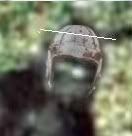
The dogear helmet first. Sweaty, can you say modify?


Nice try, mangler....but not nice enough!


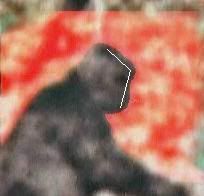
To start with...notice how slight the angle of the slope of the forehead is, with these helmets...

Helmets2lined.jpg


...compared to the distinctly greater slope of Patty's forehead....(the forehead without a helmet covering it ;))....

patty3lined.jpg


The angle is even sharper in Patty's profile view....

PattyHD4lined.jpg


Hey mangler.....can you say "try again"!


More fun stuff....:)...

In pasting a helmet over Patty's head......you forgot one important detail...Patty's head is very narrow in the top 2-3 inches, and therefore a football helmet cannot be up as high as you show it.

Helmets3lined.jpg


The helmet needs to be downsized quite a bit....to fit. If you'd like, I can do it....while you take a shi_....:D
 
Last edited:
Status
Not open for further replies.

ISF - Join now!

Every member here is approved by hand. No bots, no spam, just people who care about evidence and honest debate.

Membership is free!

Create your free account

Back
Top Bottom