science fraud is common place

Surely a 10 fold increase in scientific fraud would be a cause for alarm.
Surely a 10 fold increase in the detection of scientific fraud in biomedical and life sciences papers would be a cause for joy, justintime :p.
Seriously though you do know that Misconduct accounts for the majority of retracted scientific publications is not about the occurrence of scientific fraud, justintime. It is about the presence of fraud in retracted papers (which are also retracted because of other reasons, e.g. honest errors). The relationship to occurrence is uncertain as Dinwar points out.

Tenfold increase in scientific research papers retracted for fraud
In addition, the long-term trend for misconduct was on the up: in 1976 there were only three retractions for misconduct out of 309,800 papers (0.00097%) whereas there were 83 retractions for misconduct out of 867,700 papers at a recent peak in 2007 (0.0096%).

Citing a source that states that scientific fraud is s tiny percentage does not support an assertion that scientific fraud is "commonplace".
 
Last edited:
Sorry, justintime, but you are very wrong:
1) Scientists are great communicators - to other scientists. There is no requirement for scientists in general to communicate to the public. They use scientific language to communicate effectively to scientists. They show their ability to articulate their discipline and indulge in clear and concise language to communicate to scientist.

Scientists who make it their job to communicate to the public generally do a very good job.

Maybe with 20 reasons why scientists are poor communicators will put this issue to rest.
Over 10 reasons given here.
Please Explain: Training Scientists to Be Better Communicators
http://researchexplainer.com/2010/0...aining-scientists-to-be-better-communicators/

And 10 more reasons below.

1. Many scientists don’t approve of communicating with nonscientists.
2. Many scientists don’t expect themselves to be able to communicate.
3. Many scientists over-value rationality, and mistrust – and even disdain – emotion.
4. Many scientists disavow their own emotions. This may lead them to project their emotions onto the public and the media.
5. Many scientists fail to allow for the public’s mistrust.
6. Many scientists collude with the public’s desire to be over-reassured.
7. Many scientists do not trust the public.
8. Many scientists see themselves as outside the communication process.
9. Many scientists don’t notice when they have gone beyond their expertise.
10. Many scientists forget to start where their audience is.
Scientists and the Public:
Barriers to Cross-Species Risk Communication
http://www.psandman.com/col/species.htm
 
justintime said:
Maybe with 20 reasons why scientists are poor communicators will put this issue to rest.
I can think of a few hundred reasons why unicorns exist, but that doesn't prove they do. You need to demonstrate that there's something to talk about BEFORE you propose a mechanism.

1. Many scientists don’t approve of communicating with nonscientists.
Flat-out lie. Most of us are REQUIRED to do so.

. Many scientists don’t expect themselves to be able to communicate.
Flat-out lie. Most of us are REQUIRED to do so--both verbally and in written communications.

3. Many scientists over-value rationality, and mistrust – and even disdain – emotion.
Someone's obviously never met a scientist. We're humans. We focus on rationality in our papers and jobs because that's what is required; emotions are irrelevant. But when we talk to others we tend to use teaching tools that they have emotional attachments to (I hate football, but it's a fantastic tool for explaning scientific concepts).

4. Many scientists disavow their own emotions.
Actually, it's the other way around. most of us are passionate people who feel more deeply about things than non-scientists can imagine.

5. Many scientists fail to allow for the public’s mistrust.
The first true thing you've said in almost the entire thread! Not exactly our fault, however--the mistrust means that nothing we say is going to matter anyway.

6. Many scientists collude with the public’s desire to be over-reassured.
Nope. Most of us don't CARE about reassurance.

7. Many scientists do not trust the public.
Flat-out lie.

8. Many scientists see themselves as outside the communication process.
I'd love to see a professional writer (and make no mistake, we ARE professional writers) view themselves as "otuside the communication process". The concept doesn't make sense.

9. Many scientists don’t notice when they have gone beyond their expertise.
Again, it's the opposite. We are VERY aware of our areas of expertise--and more than willing to call each other out on it when we over-step those areas.

10. Many scientists forget to start where their audience is.
Some do, some don't.

I notice that you place no responsibility on the audience, and insist on treating scientists as somehow outside of society in these bullet-points. There's also no evidence to support any of this nonsense.

Reality Check said:
Citing a source that states that scientific fraud is s tiny percentage does not support an assertion that scientific fraud is "commonplace".
~sarcasm~ You mean there's natural variation in fraud rates, at a very low level? Obviously science doesn't work!!!! We can prove it by finding some increase, regardless of whether it makes mathetmatical sense or not!!!! :D
 
Surely a 10 fold increase in the detection of scientific fraud in biomedical and life sciences papers would be a cause for joy, justintime :p.
Seriously though you do know that Misconduct accounts for the majority of retracted scientific publications is not about the occurrence of scientific fraud, justintime. It is about the presence of fraud in retracted papers (which are also retracted because of other reasons, e.g. honest errors). The relationship to occurrence is uncertain as Dinwar points out.

Tenfold increase in scientific research papers retracted for fraud


Citing a source that states that scientific fraud is s tiny percentage does not support an assertion that scientific fraud is "commonplace".

The increase in scientific fraud has increased 10 fold since 1975 and is no longer a tiny percentage. Today almost two-third are identified as fraud cases and not due to error.
The whole idea of having peer-review and strict adherence to the scientific method is to prevent fraud. Two-thirds retracted in just one discipline is outrageous. Now multiply that across all the other scientific disciplines and you have the appearance of criminal behavior rampant in the scientific community. It is about time criminal charges are brought against scientists in scientific fraud cases.

"The study, published on Monday in the Proceedings of the National Academy of Sciences (PNAS), found that more than two-thirds of the biomedical and life sciences papers that have been retracted from the scientific record are due to misconduct by researchers, rather than error."
 
justintime said:
The increase in scientific fraud has increased 10 fold since 1975 and is no longer a tiny percentage

Lie.

Reality Check said:
83 retractions for misconduct out of 867,700 papers
This is 0.95%. Less than 1%. Statistically speaking, it's not a significant number. That pretty neatly plants it in the "tiny percentage" bin.

justintime said:
The whole idea of having peer-review and strict adherence to the scientific method is to prevent fraud.
No, not at all. This was explained up-thread.

Two-thirds retracted in just one discipline is outrageous.
Equivocation. You're trying to disguise the fact that two thirds of the papers retracted were retracted due to fraud, not error. Ideally, it'd be 0 for each, but error certainly should be 0. Seeing the number of errors reduced is a very good thing, despite your obviously biased and ignorant rantings.

Now multiply that across all the other scientific disciplines...
"We don't need no stinkin' data!" :rolleyes:

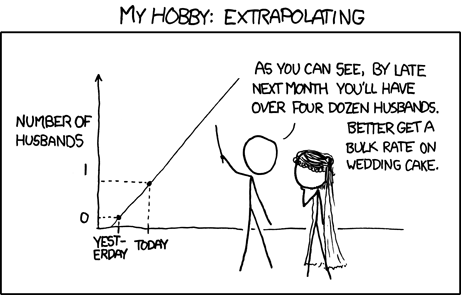
Are you aware of the dangers of extrapolation?
 
Maybe with 20 reasons why scientists are poor communicators will put this issue to rest.
Over 10 reasons given here.
Please Explain: Training Scientists to Be Better Communicators
http://researchexplainer.com/2010/0...aining-scientists-to-be-better-communicators/

And 10 more reasons below.

1. Many scientists don’t approve of communicating with nonscientists.
2. Many scientists don’t expect themselves to be able to communicate.
3. Many scientists over-value rationality, and mistrust – and even disdain – emotion.
4. Many scientists disavow their own emotions. This may lead them to project their emotions onto the public and the media.
5. Many scientists fail to allow for the public’s mistrust.
6. Many scientists collude with the public’s desire to be over-reassured.
7. Many scientists do not trust the public.
8. Many scientists see themselves as outside the communication process.
9. Many scientists don’t notice when they have gone beyond their expertise.
10. Many scientists forget to start where their audience is.
Scientists and the Public:
Barriers to Cross-Species Risk Communication
http://www.psandman.com/col/species.htm

Justintime:

Please communicate in what area of science your expertise lies..."mate".
 
1. Many scientists don’t approve of communicating with nonscientists.
2. Many scientists don’t expect themselves to be able to communicate.
3. Many scientists over-value rationality, and mistrust – and even disdain – emotion.
4. Many scientists disavow their own emotions. This may lead them to project their emotions onto the public and the media.
5. Many scientists fail to allow for the public’s mistrust.
6. Many scientists collude with the public’s desire to be over-reassured.
7. Many scientists do not trust the public.
8. Many scientists see themselves as outside the communication process.
9. Many scientists don’t notice when they have gone beyond their expertise.
10. Many scientists forget to start where their audience is.
What percentage is "many"?

Are you aware of the dangers of extrapolation?
extrapolating.png
 
0.0096% is a tiny percentage justintime

The increase in scientific fraud has increased 10 fold since 1975 and is no longer a tiny percentage.
You obviously need to learn to understand what you read, justintime.
There is no 10-fold increase in scientific fraud. There is a 10-fold increase in retractions caused by scientific fraud.

Tenfold increase in scientific research papers retracted for fraud
In addition, the long-term trend for misconduct was on the up: in 1976 there were only three retractions for misconduct out of 309,800 papers (0.00097%) whereas there were 83 retractions for misconduct out of 867,700 papers at a recent peak in 2007 (0.0096%).
0.0096% is a tiny percentage, justintime :jaw-dropp
 
0.0096% is a tiny percentage, justintime :jaw-dropp

Ah, blast! In my post I calculated the number correctly, then multiplied it by 100 in my head when I typed! You're right--the real number is 0.0096%.

For reference, we typically dont' call something statistically significant unless it's >5%.

Hellbound said:
I prefer a quote from a book by Scott Adams, discussing various ideas used in business (paraphrased):
It's actually worse--at least that's extrapolating within a system. justintime is attempting to extrapolate between different systems. What he's doing is akin to saying that since rocky plannets have hard surfaces, therefore so do white holes, stars, nebula, and all other celestial phenomena. The reality is that different sciences tend to attract different people, and there's a broad range of types of people in each science. A field geologist who's spent ten years behind a drill rig is going to be much, much different than a tenured professor of theoretical physics. I've dealt with both, so that's an empirical observation, not a hypothesis. While we're all pasionate and devoted to our fields, the guy behind the drill rig doesn't have any choice but to become good at communicating with people who aren't as educated (most of the drillers I've worked with hadn't gone to college, and a surprising number didn't even have GEDs or diplomas).
 
Maybe with 20 reasons why scientists are poor communicators will put this issue to rest.
Maybe you should not post irrelevant replies, justintime :D.
My point was that Scientists are great communicators - to other scientists with the secondary point that scientists who inform the public tend to be good at their job.

Of course people should train to be better communicators. That is just good social etiquette. Scientists have a higher responsibility to inform public policy well when required.
The "Many" scientists list is silly for many reasons.

It is basically a transcript of a conference speech.
It is from 2003.
It is a list of assertions without much evidence.
No stated credentials for the authors (Jody Lanard looks like a psychiatrist specializing in risk communication).
It uses the word "many" as meaning at least 1 (no actual numbers)!
"Almost forty years ago, Rae Goodell did a doctoral dissertation..." - where is the current research!
etc.
​
 
Ah, blast! In my post I calculated the number correctly, then multiplied it by 100 in my head when I typed!
A minor point, Dinwar: That list is not justintime's. It is from this web page which is a transcript of a speech given in October 2003. The list of section titles is deceptive, e.g. "1. Many scientists don’t approve of communicating with nonscientists" is really "1. Many scientists don’t approve of scientists becoming famous" (basically the tall poppy syndrome).
 
Reality Check said:
A minor point, Dinwar: That list is not justintime's. It is from this web page which is a transcript of a speech given in October 2003. The list of section titles is deceptive, e.g. "1. Many scientists don’t approve of communicating with nonscientists" is really "1. Many scientists don’t approve of scientists becoming famous" (basically the tall poppy syndrome).
Fair enough. I still contend that as presented by justintime a number of them are lies.

As an aside, I've heard very good arguments against scientists seeking fame. Basically, from the perspective of the scientist I was speaking to, fame and research are in opposition to one another--you can seek out one or the other, but not both. Plus, "famous" doesn't mean "right", it merely means "popular". I'm a bit more generous--some scientists become famous without sacrificing the quality of their research--but in a lot of cases it's true that famous scientists tend to not do a lot of basic research. And a LOT of famouse "scientists" are anything but!
 
Why are you thinking that people like Justintime are 'against science' or 'against scientists' when they give some arguments 'contra'? Isn't this how discussions suppose to be.
I'm not 'against science' or 'against scientists'.
No one is against a fair method of trying to be neutral and trying to be objective.

But, imagine that you are a scientist in a very competitive environement. And you send your work to a journal and peers must decide wether it's good or not...

It's like asking another company (your competitor) to evaluate your product.

That's asking for problems with 'objectivity' or problems with 'getting neutral, unbiased reviews'.

We are not the only people saying this.
I read some articles from scientists and their experiences with peerreview. They worked hard on it, send it to a journal and another group of scientists took their data and published it in their study.


You seem to have this attitude of 'black against white'. Or you are defending what's been called 'science' these days or you are against science.

this is a discussionforum. So everyone may post arguments and counterarguments. This is not about 'people against science or pro science'. This is just a free discussion with free arguments.

And everyone likes a 'neutral' and 'objective' evaluation. (science).
No one is against that.

But 'reputation of the author' or 'title' or 'being scientist' are no objective criteria for the evaluation of a paper. Not at all. It's always about the content: are the premisses true and is the logic valid.

And when someone did years of study and hard work, he or she wants to have a fair change. And that's not always the case with the current peerreview method.
 
Last edited:
You obviously need to learn to understand what you read, justintime.
There is no 10-fold increase in scientific fraud. There is a 10-fold increase in retractions caused by scientific fraud.

Tenfold increase in scientific research papers retracted for fraud

0.0096% is a tiny percentage, justintime :jaw-dropp

The 0.0096% was in 2007 from a low of (0.00097%) in 1976. But as of 2012 "(PNAS), found that more than two-thirds of the biomedical and life sciences papers that have been retracted from the scientific record are due to misconduct by researchers, rather than error."
It only takes a small percentage of fraud to create havoc. Take the example of thalidomide babies.Andrew Wakefield's MMR vaccine papers, the tobacco industry.
 
Last edited:
The 0.0096% was in 2007 from a low of (0.00097%) in 1976. But as of 2012 "(PNAS), found that more than two-thirds of the biomedical and life sciences papers that have been retracted from the scientific record are due to misconduct by researchers, rather than error."
It only takes a small percentage of fraud to create havoc. Take the example of thalidomide babies.Andrew Wakefield's MMR vaccine papers, the tobacco industry.

I'm calling your numbers garbage.

0.00097% is one in a hundred thousand. Where did you obtain the information that one out of a hundred thousand 1976 papers was fraudulent? 100,000 is in the ballpark of the total number of science papers, in all fields, published in 1976. If you (or your source) is claiming a fraud-rate of "0.00097%" in 1976, they are basically claiming that the number of fraudulent papers is APPROXIMATELY ONE. One fraudulent paper in 1976.

That's nonsense. I am virtually certain that fraud was committed more than once in 1976. Your source is claiming to have detected only one fraud? Here's a hint. There are two reasons to fail to detect something: (a) because it isn't there, or (b) because your methods are not sensitive to it.

The idea "there was only one fraudulent paper in 1976" is so transparently ridiculous, I strongly favor the latter interpretation. Your analysis uses a method (what, reading the text of published retractions?) which was not very good at detecting fraud in 1976. Maybe the custom for wording retractions has changed. Maybe the custom governing whether or not to formally retract has changed. Either of those facts invalidates your claim, i.e. the claim that the fraud rate in 1976 was "0.00097%". I would say that you don't actually know whether the fraud rate went up, down, or stayed the same. All you know is this weak indicator.

Here's something else funny about that number. Your source is reporting 0.00097%? A number with two significant figures? Remarkable. That second significant figure is a claim of knowledge of the fraud-rate with a precision of order 100 parts per billion. Given that it's impossible to get a 100ppb measurement by counting hits in a 100,000-sample dataset, do I need to accuse your source of---well, not fraud, but statistical malpractice?
 
But, imagine that you are a scientist in a very competitive environement. And you send your work to a journal and peers must decide wether it's good or not...

It's like asking another company (your competitor) to evaluate your product.
Funny how the people in this thread who have actually been involved in peer review (both as reviewers and as those having their work reviewed) don't appear to share this view.

And when someone did years of study and hard work, he or she wants to have a fair change. And that's not always the case with the current peerreview method.
Do you even know what the current method is?
 
justintime seems to be attacking a Straw Vulcan! :)

(I know, I shouldn't give him ideas. Next thing you'll know, he'll be quoting that article as if it referred to real people! :jaw-dropp)
 
Akri, do you really think that a scientist is going to admit here on a forum that he doesn't like the current peerreview process? He or she is not going to risk his or her reputation or careerchanches.
But the fact is: you ask your competitor in the same field to judge you... Objective method? No, not at all.

And do you really think that there are a lot of scientists who want to do a study on science fraud in current 'theories'? They don't want to lose their titles. The university doesn't want to lose it's reputation. The truth is less important in such a case.
 
Last edited:

ISF - Join now!

Every member here is approved by hand. No bots, no spam, just people who care about evidence and honest debate.

Membership is free!

Create your free account

Back
Top Bottom