I've been trying to tell them. The main paper has 3,024 unique I.P. downloads so there has to be something happening. But really, I've been reading the Structure of Scientific Revolutions by Thomas Kuhn, and I wholeheartedly agree that the new paradigm that I am working on is already in "normal science" mode, and it is incommensurable, to the outdated paradigm full of counterinstances.
The main incommensurability is in the definitions of the words offered. For instance to the dogma, all stars shine in the visible spectrum. If it doesn't shine then it cannot possibly be a "star". Yet, according to the law of conservation of mass and energy, if something loses mass and energy, as do stars, then they will be less massive and less energetic.
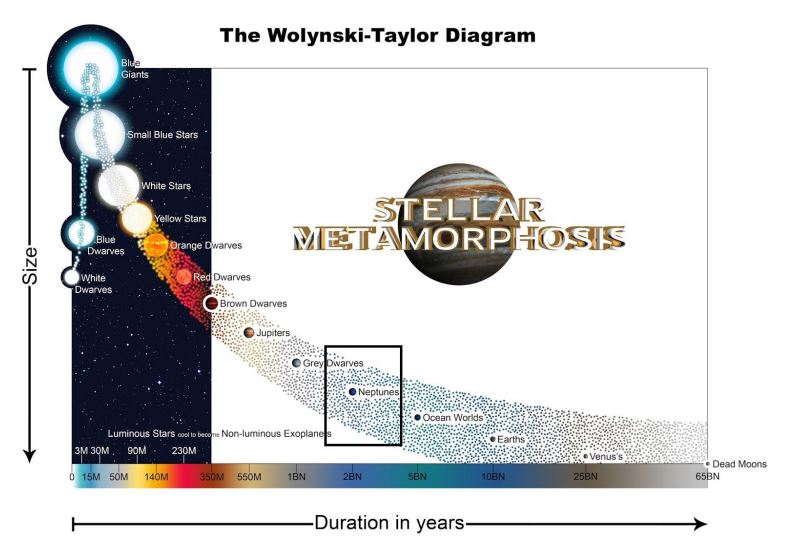
Therefore we should expect the evolved stars to be less massive and less energetic, to the point that they no longer shine and are very small. This is very straight forward, though incommensurable. I have now defined stars that are "alive" and still evolving via chemical equilibrium. When I say "star" I mean all stages of a star, even dead ones such as Mercury. When astronomers say "star" they think objects that shine in the visible spectrum. We will talk past one another. This is partly due to them not being well-rounded and ignoring history of these types of paradigm shifts.
Stellar evolution (planet formation) is now defined in terms of chemistry, which has never been done before. It is also only natural to define planet formation as centered on the central science, chemistry. Without mentioning large scale chemical principles in reference to the old stars (which contain vast amounts of chemicals), then the theories/models used to explain the processes concerning their formation are misguided at best.
So in short, all stars can now be defined appropriately, not just from the 18-19th century assumption that they all shine brightly in the visible spectrum.
So the incommensurability is this: I refer to stars in terms of chemistry, and the dogma refers to stars in terms of nuclear reactions and planets absent chemical principles, regardless if planets are GIANT balls of chemicals and crystalline/liquid structure formed from chemical, (thermochemical/electrochemical/photochemical) reactions. I have outlined this fact in this paper:
http://vixra.org/pdf/1706.0373v1.pdf
We have two very different world views. One is situated in the early 20th century based on a plethora of assumptions that have no statistical significance (none of the early assumptions knew of stars in intermediate stages of evolution such as brown dwarfs, or the most ancient stars, mislabeled "planet/exoplanet"), and the other situated in a currently fast growing statistical analysis of the objects observed, which show a continuous pattern of mass loss, diminishing radiation, diminishing gravitational fields, changing chemical composition, shrinking atmospheres and even growing internal structure as the central object forms, as evidenced by the very ground we are walking on.
So its up to the people here. Work on the new paradigm with me, or ignore it and call me a pseudoscientist. I don't really care anymore. People do their own convincing. I'm just here to point people in the direction astronomy is headed, because I'm leading it, without approval of academics.

 !


 ! That is where the fantasy is obvious - he hopes that the age of the universe is between the debunked Steady State theory (infinite!) and the established Big Bang theory.